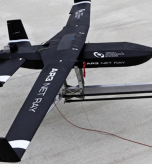



Over the past few years, we’ve been operating long-range BVLOS RPAS missions in one of the most complex airspace environments in the world — the Niger Delta — alongside dense, low-level helicopter traffic.
Today, we’re sharing something we believe is important for the wider aviation and RPAS community.
We’ve published a white paper outlining a practical, real-world deconfliction model for BVLOS operations in manned airspace, based on:
- 5,000+ flight hours
- 390,000 km flown
- Zero airprox or mid-air incidents.
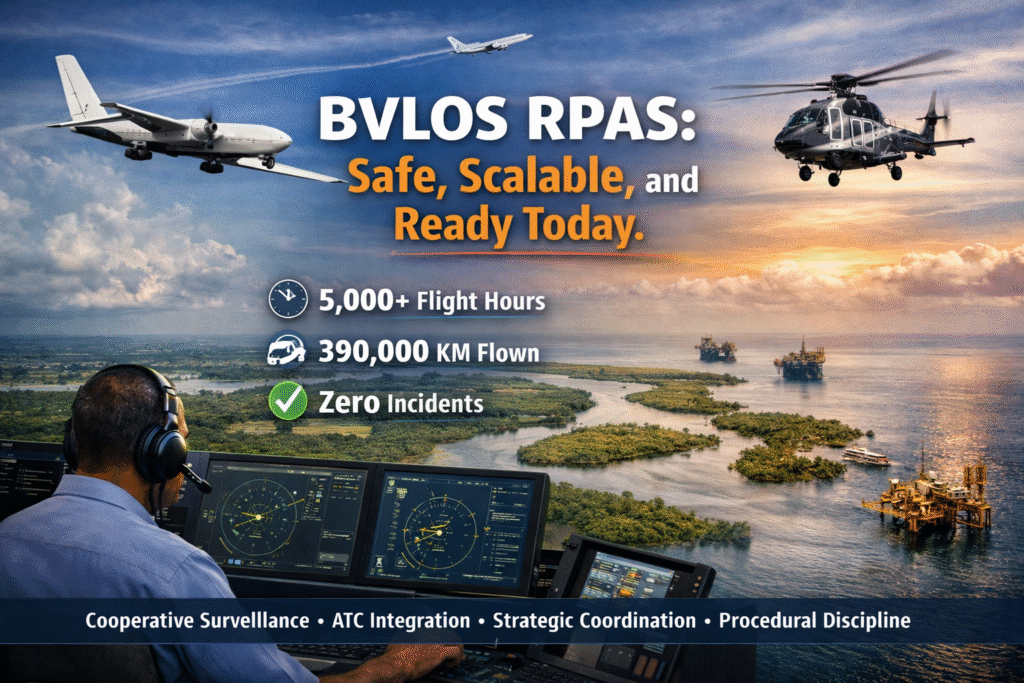
The paper demonstrates that safe, scalable BVLOS operations are achievable today using existing aviation systems — through a layered approach combining:
- Cooperative surveillance (Mode S / ADS-B)
- ATC integration
- Strategic coordination
- Procedural discipline
It also addresses key areas often debated but rarely evidenced:
- Empirical risk quantification
- Human factors (including cockpit awareness asymmetry)
- Alignment with ICAO, SORA and regulatory frameworks
- Importantly, this is not an argument against UTM.
- UTM remains a critical future enabler of scale.
But this work addresses a practical question many regulators and operators face today:
– How do we safely integrate BVLOS operations in airspace where UTM is not yet fully deployed?
Our experience shows that the answer already exists — within the aviation system itself.
We’re sharing this as a contribution to the ongoing discussion and would welcome engagement from regulators, operators, and industry stakeholders globally.
Click Here to Download the White Paper